 Image 1 of 1
Tripod
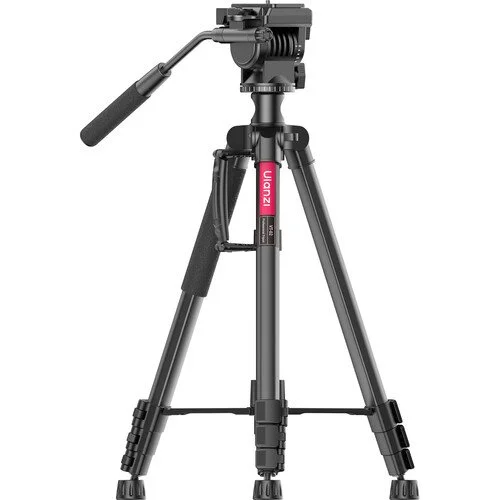
A tripod is an essential tool for creating sharp, professional images and consistent wall art. Whether shooting portraits, product photos, or low-light scenes, a tripod stabilizes your camera to eliminate blur, enable longer exposures, and maintain precise framing across a shoot.
Key benefits
Stability: Reduces camera shake for tack-sharp images, especially with telephoto lenses or slow shutter speeds.
Consistency: Keeps framing identical between shots—critical for multi-frame composites, time-lapse, and before/after comparisons.
Flexibility: Frees you to step into the frame for self-portraits or controlled group portraits without rushing.
Creative control: Allows use of slower shutter speeds for motion blur, night photography, and greater depth-of-field via smaller apertures.
Precision: Micro-adjustments and levels help align horizons and maintain verticals for wall art that fits seamlessly in a space.
Choosing the right tripod
Load capacity: Select a tripod that comfortably supports your camera and heaviest lens plus any accessories (flash, microphone, etc.).
Height and weight: Balance portability with a comfortable working height; heavier tripods are more stable, lighter ones easier to carry.
Head type: Ball heads are quick and flexible; three-way heads offer finer, independent axis control—useful for architectural lines and precise framing.
Leg locking: Twist locks are compact and quick; flip locks can be faster to operate in cold conditions or with gloves.
Material: Aluminum is durable and cost-effective; carbon fiber is lighter and better at dampening vibrations.
Center column: Useful for extra height but can reduce stability—consider mid-level spreaders or low-angle options for ground-level shots.
Feet: Rubber feet are fine for indoors; spiked feet improve grip on uneven outdoor surfaces.
Practical tips for better results
Use a remote release or camera's timer to avoid introducing shake when pressing the shutter.
Keep tripod legs at different lengths on uneven ground to maintain a level head.
Lower the center column when possible for maximum stability.
Add weight (camera bag or dedicated
Tripod
A tripod is an essential tool for creating sharp, professional images and consistent wall art. Whether shooting portraits, product photos, or low-light scenes, a tripod stabilizes your camera to eliminate blur, enable longer exposures, and maintain precise framing across a shoot.
Key benefits
Stability: Reduces camera shake for tack-sharp images, especially with telephoto lenses or slow shutter speeds.
Consistency: Keeps framing identical between shots—critical for multi-frame composites, time-lapse, and before/after comparisons.
Flexibility: Frees you to step into the frame for self-portraits or controlled group portraits without rushing.
Creative control: Allows use of slower shutter speeds for motion blur, night photography, and greater depth-of-field via smaller apertures.
Precision: Micro-adjustments and levels help align horizons and maintain verticals for wall art that fits seamlessly in a space.
Choosing the right tripod
Load capacity: Select a tripod that comfortably supports your camera and heaviest lens plus any accessories (flash, microphone, etc.).
Height and weight: Balance portability with a comfortable working height; heavier tripods are more stable, lighter ones easier to carry.
Head type: Ball heads are quick and flexible; three-way heads offer finer, independent axis control—useful for architectural lines and precise framing.
Leg locking: Twist locks are compact and quick; flip locks can be faster to operate in cold conditions or with gloves.
Material: Aluminum is durable and cost-effective; carbon fiber is lighter and better at dampening vibrations.
Center column: Useful for extra height but can reduce stability—consider mid-level spreaders or low-angle options for ground-level shots.
Feet: Rubber feet are fine for indoors; spiked feet improve grip on uneven outdoor surfaces.
Practical tips for better results
Use a remote release or camera's timer to avoid introducing shake when pressing the shutter.
Keep tripod legs at different lengths on uneven ground to maintain a level head.
Lower the center column when possible for maximum stability.
Add weight (camera bag or dedicated